The Rise of Robotic Employees: From Software to Physical
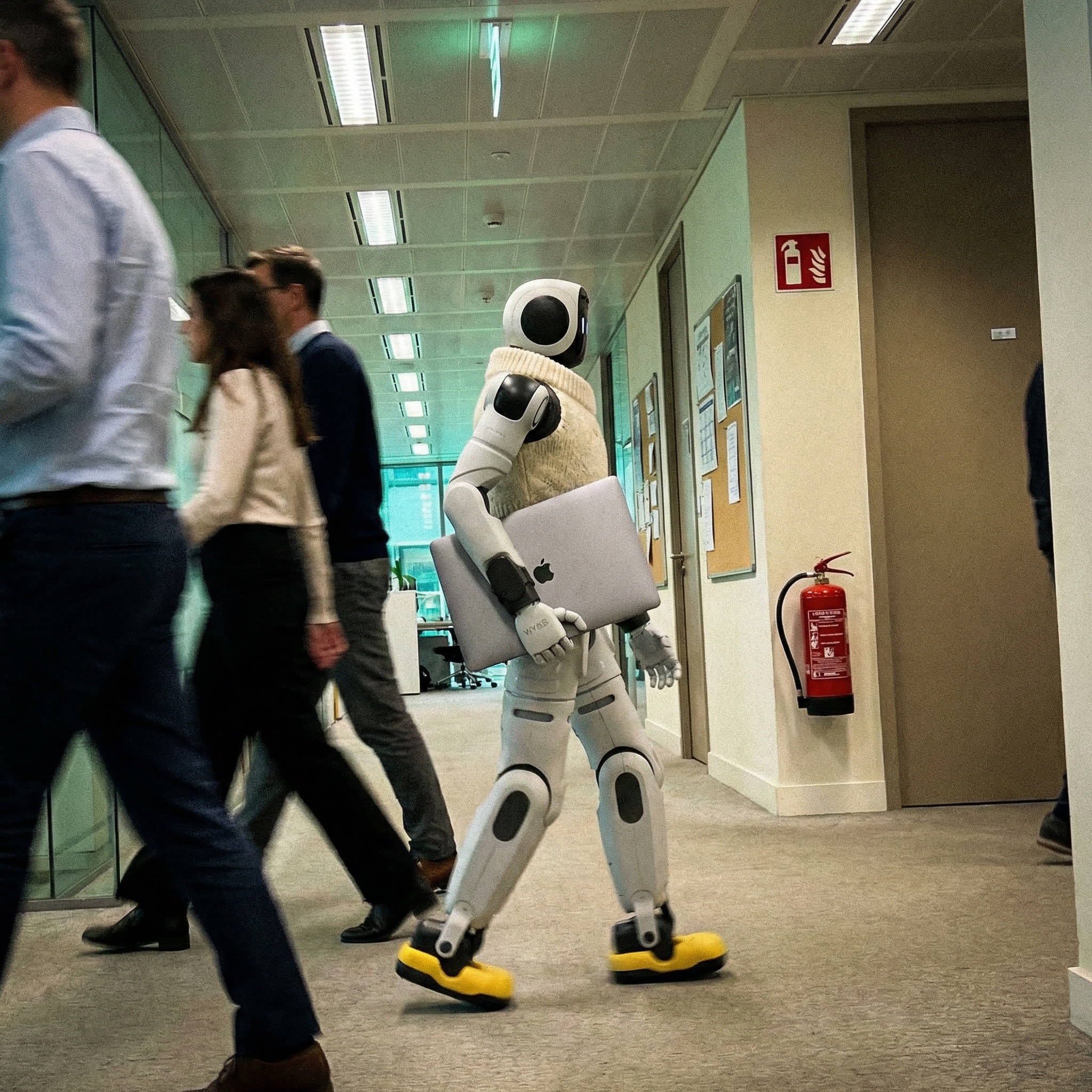
The idea of a robotic employee is not new. What is new is that it no longer requires a million-dollar machine bolted to a factory floor. The robot employee of 2026 starts as software, lives on a small device in your back office, and does real operational work from day one. It answers phones, manages bookings, handles guest communications, and coordinates tasks across your business — in over 30 languages, around the clock, without ever calling in sick.
This is not science fiction. This is happening right now, and it is changing the future of work faster than most people realize.
A brief history: from welding arms to AI colleagues
The first industrial robots appeared on assembly lines in the 1960s. They were big, expensive, and dangerous — caged off from human workers. Their job was narrow: weld this joint, move that part, repeat a million times. For decades, that was what "robot" meant in the workplace. A machine that replaced a single physical motion.
Then came software automation. Macros, scripts, RPA bots. These were the invisible robots — they lived inside computers and handled data entry, invoice processing, email sorting. Useful, but limited. They followed rigid rules and broke the moment something unexpected happened.
The current wave is fundamentally different. AI-powered systems can now understand context, make judgment calls, and handle the kind of ambiguous, messy operational work that used to require a human employee. Not just answering a scripted FAQ — actually managing operations, making decisions, and communicating naturally with customers and staff alike.
Beyond chatbots: AI that actually works
Most people's experience with AI in the workplace is a chatbot on a website. You type a question, you get a canned response, and eventually you ask to speak with a real person. That is not what we are talking about here.
What makes the current wave possible is proprietary AI architecture — like the neocortex™ engine — with persistent memory and emotional awareness. These are not language model wrappers or chatbot frameworks with a new coat of paint. They are purpose-built systems that remember every interaction, reason through ambiguity, and build institutional knowledge over time. The new generation of robotic employees performs actual operational work. They answer phone calls and understand what the caller needs. They manage reservations across multiple platforms and resolve conflicts automatically. They send follow-up communications at the right time, in the right language. They coordinate maintenance requests, handle check-in procedures, and escalate only the issues that genuinely require human judgment.
This is the AI workforce in its truest form — not a tool you interact with, but a colleague that handles its own responsibilities. The capabilities of these systems now span the full range of operational tasks that keep a service business running.
The software-first approach: earn the right to become physical
Here is where most robotics companies get it backwards. They start with the hardware — the humanoid form, the articulated hands, the walking mechanism — and then try to figure out what useful work the machine can actually do. The result is impressive demos and limited real-world value.
The smarter path is to start as software. Prove that the AI can handle the cognitive and communicative demands of a real job before giving it a body. Learn the workflows, the edge cases, the thousand small decisions that make up a workday. Build trust with the businesses that depend on you. Then, and only then, consider whether a physical presence would add value.
This is exactly Wybe's approach. Wybe begins as a software-based robotic employee — a Node that sits on-premises and handles your operations through calls, messages, and deep system integrations: phone, email, calendar, CRM, Slack, WhatsApp, and any tool the business already uses. The timeline is deliberate: software first, deep understanding second, physical presence only when it has been earned through proven competence.
Industries already making the shift
The adoption of AI-powered robotic employees is not theoretical. It is already underway in industries where operational consistency and availability matter most:
- Hotels and hospitality — handling reservations, guest inquiries, check-in coordination, and multilingual communication around the clock.
- Property management — managing tenant requests, coordinating maintenance, processing bookings across platforms like Airbnb and Booking.com.
- Healthcare administration — scheduling appointments, managing patient communications, and handling intake procedures.
- Logistics and operations — coordinating deliveries, managing driver communications, and resolving scheduling conflicts in real time.
What these industries share is a relentless operational tempo. Guests check in at midnight. Pipes burst on weekends. Deliveries need rerouting at 4 AM. A robot employee does not sleep, does not get overwhelmed during peak season, and does not forget to follow up.
What this means for your business
The practical benefits are straightforward. A robotic employee like Wybe offers dramatically lower costs than a full-time hire — no salary negotiations, no benefits packages, no overtime. It provides genuine 24/7 availability, not the "24/7" of an answering service that takes a message and promises a callback. And it delivers consistent quality every single time, whether it is handling the first call of the day or the hundredth.
But the deeper value is what it frees you to do. When your operations are handled — reliably, competently, without constant oversight — you get to focus on the work that actually requires a human. Strategy. Relationships. Creativity. The hospitality in hospitality. The care in healthcare.
The human element
There is an irony in the rise of the robotic employee: it might be the thing that finally lets humans be more human at work. The operational grind — the repetitive calls, the scheduling conflicts, the 3 AM emergencies — these are the tasks that burn people out and push them away from the meaningful parts of their jobs.
Wybe handles operations so humans can focus on what humans do best. Not replacing people, but removing the work that was never a good use of their time in the first place. The robot ansatt — the robotic employee — is not the end of human work. It is the beginning of better human work.
The shift from software to physical is coming. But the companies that will lead that transition are the ones building competence now — proving their AI can do the job before giving it a body. That is the future of work, and it has already started.